Wondering whether Napa Valley in Waukee is the right place for your next move? If you want more space, more privacy, and a home setting that feels tucked away without being cut off from the Des Moines metro, this neighborhood may stand out right away. Here’s what you should know about the lifestyle, home styles, location, and trade-offs so you can decide if Napa Valley fits what you want next.
What Napa Valley in Waukee feels like
Napa Valley is not your typical suburban subdivision. It is an established, private, HOA-governed community in Waukee known for rolling terrain, wooded areas, greenspace, ponds, and broad views over the Raccoon River valley.
If you are looking for a quieter setting, that matters. The neighborhood is positioned more as a low-density estate-home enclave than a standard neighborhood with tighter lots and a more uniform layout.
That means your day-to-day experience may feel more secluded and landscape-driven. You still stay within reach of Waukee and West Des Moines, but the setting is geared more toward privacy and scenery than convenience at your doorstep.
Who Napa Valley may suit best
For many buyers, Napa Valley makes sense as a move-up or relocation choice. If you want a home that feels more custom, more private, and more spread out than many west-metro options, this neighborhood checks those boxes.
It can also appeal if you value a managed community environment. The HOA oversees common areas and provides resident-focused services that support a more polished, maintained feel throughout the neighborhood.
This area may be a strong fit if you want:
- Larger lots with more separation between homes
- A private neighborhood setting
- Scenic surroundings with ponds, trees, and open views
- Community amenities within the neighborhood
- Practical access to I-80 for commuting or regional travel
Homes and lots in Napa Valley
One of the clearest differences in Napa Valley is the size of the homesites. Publicly indexed examples show single-family homes on lots of about 1.09, 1.28, 1.30, and 1.36 acres, with one example at 4.23 acres.
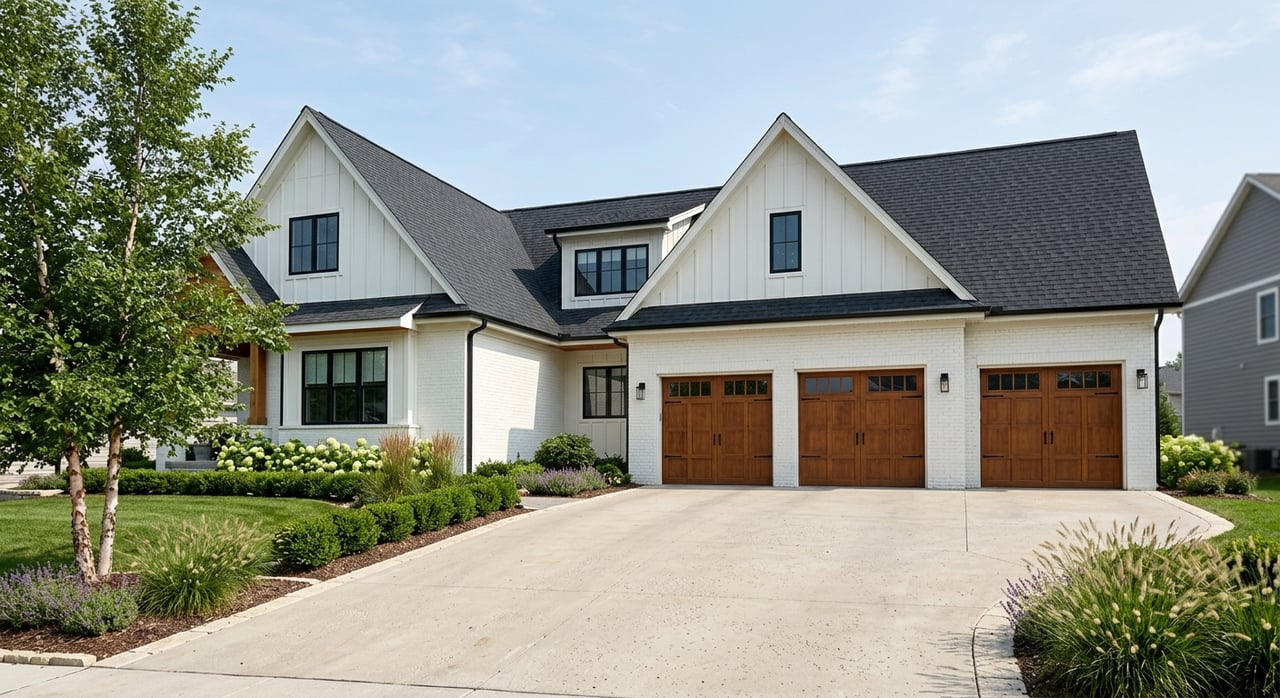
The homes themselves also point to a more executive or custom profile. Example properties range from about 3,134 square feet to nearly 5,000 square feet, with both ranch and two-story layouts represented.
Garage space also reflects that larger-home profile. Some properties include 3-car garages, while others have 4-stall garages.
If you are comparing Napa Valley to neighborhoods with compact lots or more standardized home packages, this is a very different product. The appeal here is not density or sameness. It is land, separation, and a more individualized home footprint.
Amenities inside the neighborhood
Napa Valley offers more than just larger homesites. According to the HOA, the neighborhood includes more than 40 acres of common areas, which adds to the sense of openness and shared landscape.
Residents also have access to a private pool and clubhouse, tennis court, playground, basketball court, stocked ponds, and terrain for walking and biking. Private snow removal and resident caretaking or property management are also part of the community setup.
That combination gives Napa Valley a more self-contained feel than many neighborhoods. For some buyers, that is a major plus because it blends private-home living with built-in amenities and ongoing maintenance support.
Access and everyday convenience
A private setting does not always mean difficult access. Napa Valley’s main route is I-80 West to Exit 117, then south on Ute Avenue for about two miles.
There is also an alternate approach from Raccoon River Road west to Booneville, then north on Ute Avenue. If your routine depends on the I-80 corridor, that access pattern can make the neighborhood feel practical for commuting and regional trips.
In everyday terms, Napa Valley works well for buyers who want a tucked-away home base without feeling isolated. You are trading immediate retail adjacency for a more peaceful setting, but the metro is still within reach.
Nearby recreation beyond the HOA
The neighborhood’s private amenities are only part of the picture. Waukee’s broader park system includes 22 city parks and 25 miles of trails, which expands your options for outdoor time beyond the neighborhood itself.
You also have access to Sugar Creek Municipal Golf Course and the 89-mile paved Raccoon River Valley Trail, which has a Waukee trailhead. For buyers who want both neighborhood privacy and citywide recreation, that can be a strong balance.
This is one reason Napa Valley stands out. It offers a more nature-oriented residential setting while still connecting you to the wider amenities available in Waukee.
How Napa Valley compares to other west-metro choices
The easiest way to understand Napa Valley is to compare it with some nearby alternatives. In Waukee, Kettlestone represents a very different type of growth and lifestyle.
The city describes Kettlestone as a 1,500-acre mixed-use district with shopping, dining, personal services, parks, ponds, trails, entertainment, and direct access to Interstate 80 via Grand Prairie Parkway. It is also planned for up to 7,000 new housing units.
If that sounds appealing to you, Kettlestone offers a more connected, active, mixed-use environment. Napa Valley, by contrast, is quieter, lower density, and more focused on estate-style living.
West Des Moines also offers different lifestyle choices. Areas like Valley Junction connect more closely to the city’s historic core, while Jordan Creek Park anchors a large greenway with a 7-mile paved trail and park amenities.
Compared with those settings, Napa Valley is less about walkable retail or activity hubs. It is more about land, privacy, and a residential atmosphere that feels removed from busier commercial areas.
Trade-offs to think through
Every neighborhood has a personality, and every personality comes with trade-offs. In Napa Valley, the biggest strengths are also clues about what may or may not fit your lifestyle.
If you want to walk to shops, restaurants, or services, this may not be the best match. The neighborhood’s appeal is rooted in space, scenery, and a more private residential setting rather than a compact, convenience-first layout.
You should also think about whether an HOA-managed environment fits your preferences. For many buyers, the common-area upkeep, amenities, and services are a benefit. Others may prefer a neighborhood with fewer shared structures or expectations.
Questions to ask yourself before moving here
If you are seriously considering Napa Valley, it helps to narrow the decision to a few practical questions:
- Do you want more land than a typical suburban lot offers?
- Do you prefer privacy over being close to retail and activity centers?
- Would neighborhood amenities like a pool, clubhouse, courts, and stocked ponds add value to your day-to-day life?
- Is easy access to I-80 important for your work or travel routine?
- Are you looking for a home that feels more custom than standard?
If you answered yes to most of those, Napa Valley may be worth a closer look. It tends to serve buyers who are making a lifestyle decision, not just a house-size decision.
Final take on Napa Valley in Waukee
Napa Valley in Waukee can be a strong choice if your next move is about gaining space, privacy, and a more distinctive home setting. Its larger lots, custom-home profile, private amenities, and nature-focused character set it apart from many other west-metro options.
At the same time, it is not trying to be everything for everyone. If your priority is a mixed-use environment or a neighborhood closer to shopping and dining, other areas may align better.
If you want help comparing Napa Valley with other Waukee and West Des Moines options, or you are planning a move that needs careful timing and strategy, London Orosco can help you evaluate the fit and plan your next step with confidence.
FAQs
Is Napa Valley in Waukee a private neighborhood?
- Yes. Napa Valley is described as a private, HOA-governed community with shared amenities and managed common areas.
What kinds of homes are in Napa Valley in Waukee?
- Publicly indexed examples point to large single-family homes with ranch and two-story layouts, often on acre-plus lots with 3-car or 4-stall garages.
Does Napa Valley in Waukee have neighborhood amenities?
- Yes. The HOA lists more than 40 acres of common areas, a private pool and clubhouse, tennis court, playground, basketball court, stocked ponds, walking and biking terrain, snow removal, and resident caretaking or property management.
Is Napa Valley in Waukee good for commuting?
- It can be practical for buyers who use the I-80 corridor, since the main route is I-80 West to Exit 117 and then south on Ute Avenue.
How is Napa Valley different from Kettlestone in Waukee?
- Napa Valley offers a quieter, lower-density estate-home setting, while Kettlestone is a large mixed-use district centered around shopping, dining, services, trails, parks, and future housing growth.
Is Napa Valley in Waukee a good fit if you want walkable retail nearby?
- Probably not. Napa Valley is better suited to buyers who value land, privacy, and a secluded residential setting over walkable retail or a mixed-use lifestyle.